


A deep dive into EPA, DHA, and why your heart, brain, eyes, and joints all depend on these essential fatty acids.
The Omega-3 Gap Most People Don’t Know They Have
Here’s a nutritional irony: omega-3 fatty acids are among the most researched compounds in the history of dietary science, yet the vast majority of people in Western countries are chronically deficient in them. The body cannot manufacture EPA (eicosapentaenoic acid) or DHA (docosahexaenoic acid) on its own — they must come from diet or supplementation. And with fish consumption declining and ultra-processed foods dominating modern diets, most people are running a deficit that quietly affects nearly every system in the body.
This isn’t a fringe wellness claim. The evidence base for omega-3 fatty acids spans decades, thousands of clinical trials, and landmark reviews involving hundreds of thousands of participants. What that research shows, consistently, is that EPA and DHA are not optional extras — they are foundational to how the heart contracts, how the brain communicates, how the eyes detect light, and how inflammation is regulated at the cellular level.
What Omega-3 Fatty Acids Actually Are
Omega-3s are a family of long-chain polyunsaturated fats. The term “essential” in nutrition has a specific meaning: the body cannot synthesize them efficiently, so they must be obtained externally. The Federal Government’s Dietary Guidelines for Americans 2020–2025 recommends adults eat at least 8 ounces of a variety of seafood per week — specifically including fish with higher amounts of EPA and DHA [1].
There are three main types worth knowing:
- ALA (alpha-linolenic acid) — found in plant sources like flaxseed, chia seeds, and walnuts. The body can convert ALA to EPA and DHA, but this process is notoriously inefficient (typically less than 5–10% conversion), making it an unreliable sole source.
- EPA (eicosapentaenoic acid) — a marine-derived fatty acid with potent anti-inflammatory properties and significant roles in cardiovascular and mental health.
- DHA (docosahexaenoic acid) — also marine-derived, and the dominant structural fat in the brain and retina. Without adequate DHA, neurons and photoreceptors simply cannot function optimally.
EPA and DHA are found primarily in cold-water fatty fish — salmon, mackerel, sardines, anchovies, and tuna — as well as shellfish and high-quality fish oil supplements [1].
Heart Health: Where the Evidence Is Strongest
The cardiovascular research on omega-3s is extensive and compelling. A landmark 2020 review analyzing 86 studies involving 162,796 people found that increasing EPA and DHA intake modestly but significantly reduced the risk of coronary events and coronary death across trials lasting between 12 and 88 months [1].
A 2025 meta-analysis published in Clinical and Translational Discovery went further, conducting a comprehensive analysis of EPA and DHA’s effects on patients with established cardiovascular disease or at high cardiovascular risk. The findings showed meaningful reductions in major adverse cardiac events, though the researchers noted differences in efficacy between EPA monotherapy and combined EPA+DHA regimens — a nuance that continues to drive research [2].
Mechanistically, omega-3s support cardiovascular health through several pathways: they help maintain healthy triglyceride levels, support vascular function, improve cardiac cell resilience, and reinforce the structural integrity of heart tissue [3]. A 2024 study also found that EPA and DHA supplementation decreased circulating extracellular vesicles by 27% and reduced their capacity to support thrombin generation — a finding with significant implications for clotting and cardiovascular protection [4].
Brain Health: The DHA Dependency
If there is one organ that runs on DHA, it is the brain. DHA is a fundamental structural component of neuronal membranes, making up a large proportion of the gray matter in the human brain. Without sufficient DHA, membrane fluidity — critical for how neurons transmit signals — is compromised.
A 2025 review published in the Journal of Education, Health and Sport found that DHA and EPA supplementation can significantly improve memory and learning, particularly in older individuals, and that omega-3s show potential in reducing the risk of neurodegenerative diseases including Alzheimer’s [5].
Research published in Scientific Reports (2025) conducted a systematic review and dose-response meta-analysis examining omega-3 supplementation across 58 randomized controlled trials. Each increment of 2,000 mg per day of omega-3 supplementation showed significant improvement in attention and perceptual speed [6]. EPA may be particularly relevant here: one double-blind crossover study found that EPA-rich supplementation enhanced neurocognitive performance in a striking way — participants’ brains appeared to work “less hard” while achieving better cognitive outcomes [7].
The American Heart Association has also highlighted research showing that DHA levels are a stronger predictor of cognitive improvement than EPA alone, though EPA adds measurable benefit when DHA levels are already high — suggesting the two work synergistically [8].
For older adults specifically, an RCT examining individuals over 70 found that 800 mg of DHA plus 225 mg of EPA over 36 months helped maintain executive function in those at risk of dementia with a low omega-3 index [9]. Among Chinese elderly with mild cognitive impairment, a six-month combined EPA+DHA protocol significantly improved cognitive scores and working memory [9].
Eye Health: The Overlooked Retinal Connection
The relationship between omega-3s and vision is one of the least appreciated — and most biologically fascinating — areas of this research. The retina has a remarkably high concentration of DHA. In fact, up to 60% of the total fatty acids in rod outer segment membrane phospholipids is DHA — and the retina is almost entirely dependent on dietary supply of this fatty acid because it cannot synthesize DHA from precursors [10].
This structural role translates into clinical importance. Research has shown that dietary omega-3 intake correlates with lower risk of age-related macular degeneration (AMD), a leading cause of vision loss in adults over 50 [11]. A 2019 Dutch study of over 4,200 participants found that those who ate two weekly servings of fish were significantly less likely to develop age-related macular degeneration [12]. Studies also suggest DHA may reduce the progression of AMD by lowering oxidative stress and inflammation in retinal tissue [13].
EPA plays a complementary role, controlling inflammation at the ocular surface and reducing symptoms of dry eye disease — a condition affecting tens of millions of people worldwide [11]. For dry eye specifically, EPA appears to show more consistent benefit at higher doses, with most clinical trials using between 1,000 and 2,000 mg of combined EPA and DHA daily [11].
Inflammation and Longevity: The Cellular Perspective
Chronic, low-grade inflammation is now understood to be a central driver of most major age-related diseases — from cardiovascular disease and type 2 diabetes to neurodegeneration and certain cancers. EPA and DHA influence this process at the molecular level.
EPA in particular modulates inflammatory signaling pathways, competing with pro-inflammatory omega-6 fatty acids (which dominate modern Western diets) for incorporation into cell membranes and enzymatic processes. DHA supports stable cellular environments and reinforces membrane structure, which in turn affects how cells communicate and respond to stress.
Research published in ScienceDirect framed this elegantly: EPA and DHA have been linked to healthy aging throughout life, associated with proper fetal development, cardiovascular function, and protection against Alzheimer’s disease — making them relevant at every stage of the lifespan, not just in older adults [3].
The omega-6 to omega-3 ratio in Western diets is often estimated at 15:1 or higher, compared to an optimal ratio closer to 4:1. This imbalance is thought to create a pro-inflammatory cellular environment, making adequate omega-3 intake not just beneficial but corrective.
Joint Comfort and Mobility
Omega-3 supplementation is widely recognized for its role in supporting joint health, primarily through its anti-inflammatory effects. EPA’s influence on inflammatory pathways helps modulate the immune response in joint tissue, which is relevant to conditions like rheumatoid arthritis and general age-related joint stiffness. DHA maintains the cellular environment that joint tissue depends on for repair and function [16].
A body of clinical evidence supports the use of omega-3s for reducing joint tenderness and stiffness, and many rheumatologists include omega-3 supplementation as part of a comprehensive approach to inflammatory joint conditions.
Getting Enough: Diet vs. Supplementation
Whole food sources of EPA and DHA remain the gold standard — fatty fish like salmon, mackerel, sardines, and anchovies are rich sources, and the research on whole-food fish consumption is, in some respects, stronger than the evidence for supplementation alone. Other nutrients in seafood, along with the broader dietary patterns associated with fish consumption, may contribute to its benefits [1].
That said, for most people, achieving clinically meaningful intakes through diet alone is difficult. Two 3.5-ounce servings of fatty fish per week are recommended, but survey data consistently show the majority of adults fall short of this. High-quality fish oil supplementation offers a practical, concentrated, and measurable way to fill the gap — particularly when sourced from purified marine extracts and third-party tested for purity.
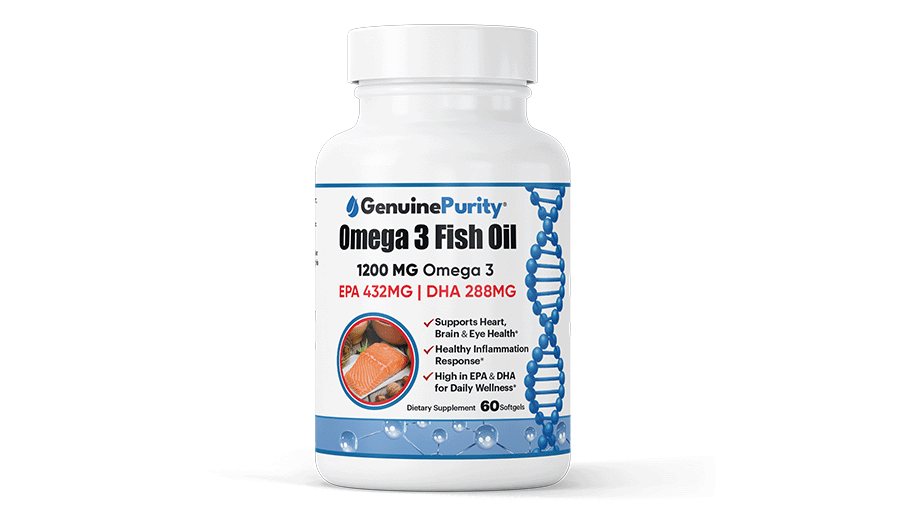
GenuinePurity® Omega-3 Fish Oil: A Supplement Worth Considering
For those looking to close the omega-3 gap with a rigorously formulated supplement, GenuinePurity® Omega-3 Fish Oil from Leading Edge Health stands out for its concentrated, clinically validated dosing. Each soft gel delivers 1,200 mg of fish oil, providing 720 mg of total omega-3 fatty acids — including 432 mg of EPA and 288 mg of DHA. This reflects the kind of meaningful, research-aligned dosing discussed throughout this article, rather than the underdosed formulas common in the supplement market.
The formula is delivered in a natural lemon-flavored soft gel with no artificial colors or flavors, and is free from unnecessary preservatives. GenuinePurity® is manufactured in the USA in cGMP-certified facilities, with every batch undergoing rigorous third-party testing for purity and potency — a quality standard that matters enormously in a supplement category where contaminants like heavy metals and oxidized fish oil are real concerns. For those committed to cardiovascular health, cognitive longevity, eye health, and whole-body anti-inflammatory support, consistent daily omega-3 intake with a product like GenuinePurity® Omega-3 Fish Oil is a straightforward, evidence-backed addition to any wellness routine. All GenuinePurity® products are backed by a 97-day money-back guarantee, making it a low-risk investment in long-term health.
References
- National Center for Complementary and Integrative Health (NCCIH). Omega-3 Supplements: What You Need to Know. U.S. National Institutes of Health. https://www.nccih.nih.gov/health/omega3-supplements-what-you-need-to-know
- Mattumpuram J, et al. (2025). Effect of omega-3 fatty acids on cardiovascular disease risk: A systematic review and meta-analysis with meta-regression. Clinical and Translational Discovery. https://onlinelibrary.wiley.com/doi/full/10.1002/ctd2.70094
- Swanson D, Block R, Mousa SA. (2012). Omega-3 Fatty Acids EPA and DHA: Health Benefits Throughout Life. Advances in Nutrition / ScienceDirect. https://www.sciencedirect.com/science/article/pii/S2161831322009620
- Bozbas E, et al. (2024). EPA + DHA supplementation, extracellular vesicles and coagulation. Cited in: N-3 Fatty Acids (EPA and DHA) and Cardiovascular Health — Updated Review. PMC. https://pmc.ncbi.nlm.nih.gov/articles/PMC12628397/
- Wesołowska W, et al. (2025). Omega-3 Fatty Acids: Key Players in Cognitive Function and Brain Health. Journal of Education, Health and Sport, Vol. 77. https://apcz.umk.pl/JEHS/article/view/56776
- Systematic Review and Dose-Response Meta-Analysis on Omega-3 and Cognitive Function. (2025). Scientific Reports. https://www.nature.com/articles/s41598-025-16129-8
- Stonehouse W, et al. (2013). Omega-3 supplementation improves cognition and modifies brain activation in young adults. PubMed. https://pubmed.ncbi.nlm.nih.gov/24470182/
- Welty F. (2021). Two omega-3s in fish oil may boost brain function in people with heart disease. American Heart Association. https://www.heart.org/en/news/2021/11/08/two-omega-3s-in-fish-oil-may-boost-brain-function-in-people-with-heart-disease
- Stonehouse W. (2018). Brain Health across the Lifespan: A Systematic Review on the Role of Omega-3 Fatty Acid Supplements. Nutrients, MDPI. https://www.mdpi.com/2072-6643/10/8/1094
- Sugasini D, Yalagala PCR, Subbaiah PV. (2020). Efficient Enrichment of Retinal DHA with Dietary Lysophosphatidylcholine-DHA. Nutrients. https://www.ncbi.nlm.nih.gov/pmc/articles/PMC7601701/
- Superpower. (2026). How Omega-3s Protect Your Vision and Relieve Dry Eyes. https://superpower.com/guides/omega3-eye-health
- Medical News Today / Chavoustie C (medical review). (2025). Fish oils and omega-3 oils: Benefits, foods, and risks. https://www.medicalnewstoday.com/articles/40253
- Dr. Agarwal’s Eye Hospital. (2025). The Role of Omega-3 Fatty Acids in Preventing Eye Disease. https://www.dragarwal.com/blog/eye-wellness/the-role-of-omega-3-fatty-acids-in-preventing-eye-disease/
- Querques G, Forte R, Souied EH. (2011). Retina and Omega-3. Journal of Nutrition and Metabolism, PMC. https://www.ncbi.nlm.nih.gov/pmc/articles/PMC3206354/
- Yalagala PCR, et al. (2020). Retinal DHA and Omega-3 Structure. Nutrients. PMC7601701.
- NVISION Eye Centers. Omega-3s and Inflammation in Joints and Eyes. https://www.nvisioncenters.com/diet-and-eye-health/omega-3s/