

What Science Actually Says About Cleansing Your Body
The word “detox” is everywhere — on juice bottles, supplement labels, spa menus, and social media feeds. Yet despite its popularity, the concept of detoxification is one of the most misunderstood topics in modern health. Some claims are grounded in genuine science; many others are marketing myths that can waste your money or even harm your health.
This article cuts through the noise. We examine the most common detox claims, weigh them against peer-reviewed research, and explain what your body actually does — and does not — need to function optimally.
How Your Body Really Detoxifies
Before evaluating any detox claim, it helps to understand the biology. The human body has a remarkably sophisticated, multi-organ detoxification system that operates around the clock without any commercial products.
The Liver: Your Primary Detox Engine
The liver is the workhorse of detoxification. Through two phases of enzymatic reactions — Phase I (oxidation, reduction, hydrolysis) and Phase II (conjugation) — the liver converts fat-soluble toxins into water-soluble compounds that can be excreted. Cytochrome P450 enzymes alone are responsible for metabolising the majority of drugs and environmental chemicals the body encounters [1].
The Kidneys
The kidneys filter roughly 200 litres of blood daily, removing waste products such as urea, creatinine, and excess electrolytes via urine. They regulate fluid balance and ensure that water-soluble toxins processed by the liver are efficiently eliminated [2].
The Lymphatic System, Skin & Lungs
The lymphatic system clears cellular waste and facilitates immune surveillance. The skin eliminates small amounts of metabolic waste through sweat, while the lungs expel volatile compounds (such as alcohol metabolites) with every breath [3].
KEY TAKEAWAY
A healthy body has built-in detox machinery. The goal of evidence-based wellness is to
support these systems — not to claim you can “flush” them with a three-day juice cleanse.
The 7 Biggest Detox Myths — Busted
MYTH 1: Juice Cleanses Remove Toxins From Your Body
REALITY: Juice cleanses do not remove toxins. Commercial cleanses typically lack scientific evidence of efficacy [4]. While increasing fruit and vegetable intake has genuine nutritional benefits, a short-term juice fast does not enhance hepatic detoxification pathways — it simply reduces caloric intake temporarily. Any “toxins” removed are done so by your liver and kidneys, as they would be on any normal day.
MYTH 2: You Need to ‘Reset’ Your Gut With a Cleanse
REALITY: The gut microbiome is a dynamic, self-regulating ecosystem. Radical cleanses — especially those involving laxatives or colonic irrigation — can disrupt the balance of beneficial bacteria (dysbiosis) rather than restore it [5]. Sustainable support for gut health comes from dietary fibre, fermented foods, and adequate hydration, not commercial purges.
MYTH 3: Sweating in a Sauna Removes Toxins
REALITY: Sweat is composed primarily of water, sodium, and trace minerals — it is not a significant route of toxin elimination. Heavy metals like lead and mercury are excreted predominantly through urine and faeces, not sweat [6]. Saunas do offer legitimate cardiovascular and relaxation benefits, but “sweating out toxins” is an oversimplification not supported by toxicology research.
MYTH 4: Activated Charcoal Detoxes Your System Daily
REALITY: Activated charcoal is a legitimate emergency medicine used in hospitals to treat acute poisoning [7]. However, taking it daily as a “detox” supplement is counterproductive: it binds non-selectively, meaning it can adsorb medications, vitamins, and beneficial nutrients along with any perceived toxins. Routine use is not supported by evidence and may cause nutritional deficiencies.
MYTH 5: Sugar Detoxes Cleanse Your Liver
REALITY: Reducing added sugar intake is genuinely beneficial for liver health — excess fructose consumption is linked to non-alcoholic fatty liver disease (NAFLD) [8]. However, the claim that a short-term “sugar detox” cleanses the liver misses the point. The liver does not store sugar as a toxin to be flushed; the benefit comes from sustained dietary change, not a temporary elimination period.
MYTH 6: Detox Teas Are a Safe, Effective Way to Lose Weight
REALITY: Many “detox teas” contain senna or other stimulant laxatives. While they may cause short-term weight loss through water and stool loss, they do not reduce body fat [9]. Prolonged use of stimulant laxatives is associated with electrolyte imbalances, dehydration, and dependence. The FDA has issued warnings about some products marketed as detox or weight-loss teas [10].
MYTH 7: The Body Accumulates Toxins Over Time Unless You Detox
REALITY: While certain persistent organic pollutants (POPs) and heavy metals can bioaccumulate in adipose tissue, the notion that everyday metabolic waste accumulates to dangerous levels in healthy individuals is not supported by evidence [11]. For the vast majority of people with functioning livers and kidneys, the body continuously processes and eliminates waste products without the need for commercial detox interventions.
What Actually Supports Your Detox Organs
Rather than reaching for a commercial cleanse, the following evidence-based strategies genuinely support your body’s natural detoxification systems:
Hydration: Adequate water intake (roughly 2–3 litres per day for most adults) is essential for renal filtration and lymphatic flow [2].
Dietary fibre: Soluble and insoluble fibre binds bile acids in the gut, aiding in cholesterol excretion and supporting a healthy microbiome [5].
Cruciferous vegetables: Broccoli, cauliflower, and Brussels sprouts contain glucosinolates that upregulate hepatic Phase II detoxification enzymes [12].
Limiting alcohol: Alcohol is directly hepatotoxic; reducing intake significantly reduces the burden on liver detoxification pathways [1].
Quality sleep: The glymphatic system — the brain’s waste-clearance network — is most active during deep sleep, flushing neurotoxic waste products such as amyloid-beta [13].
Regular exercise: Physical activity enhances circulation, supports lymphatic flow, and improves the efficiency of hepatic metabolism [3].
Alpha-Ketoglutarate (AKG): Emerging research suggests AKG plays a role in energy metabolism and the citric acid cycle, supporting cellular health and longevity — more on this below.
GenuinePurity® AKG: Cellular Support from the Inside Out
What Is Alpha-Ketoglutarate?
Alpha-Ketoglutarate (AKG) is a naturally occurring compound that sits at the very centre of the Krebs (citric acid) cycle — the biochemical engine that powers virtually every cell in the body. As a key metabolic intermediate, AKG is essential for energy production, amino acid synthesis, and nitrogen balance. It also acts as a cofactor for enzymes involved in collagen synthesis and epigenetic regulation, making it a molecule of considerable interest in longevity research [14].
AKG levels decline significantly with age. Studies have observed that circulating AKG can be up to ten times lower in older adults compared with younger individuals [15]. This decline correlates with reduced cellular energy production, slower tissue repair, and changes in the epigenetic landscape associated with biological aging. Supplementing with a bioavailable form of AKG has thus become a focus of researchers studying healthy aging.
Why GenuinePurity® AKG?
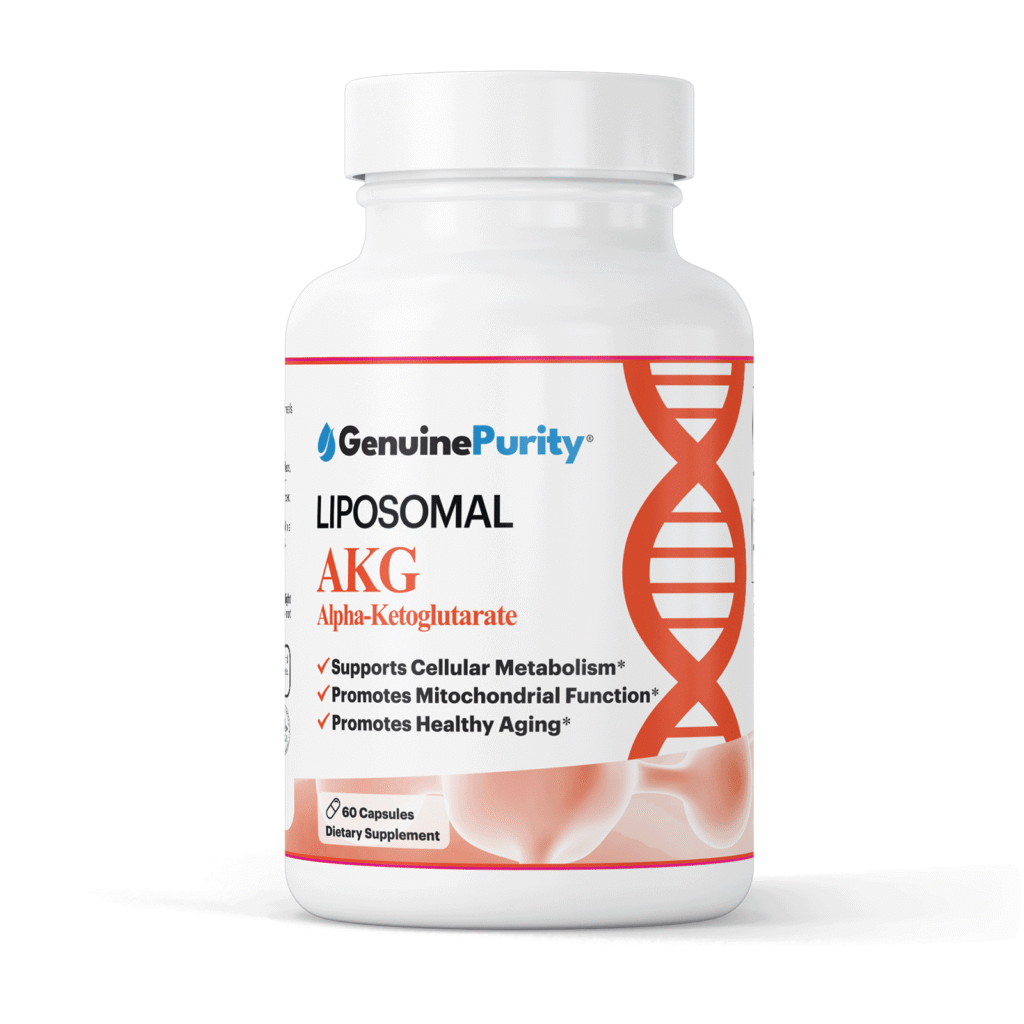
GenuinePurity® AKG by Leading Edge Health is formulated using calcium alpha-ketoglutarate (Ca-AKG) — a calcium salt form that enhances stability and bioavailability compared with the free acid. Each serving delivers a research-relevant dose in a clean, additive-minimal capsule, consistent with GenuinePurity’s commitment to pharmaceutical-grade quality and third-party testing.
Preclinical studies have shown that AKG supplementation can extend healthspan and reduce biological age markers in animal models [15]. Human research is ongoing, but the mechanistic case is compelling: by replenishing a declining metabolic substrate, Ca-AKG supplementation may help maintain the cellular energy and epigenetic integrity associated with youthful physiological function. For those focused on supporting their body’s natural processes — rather than chasing mythologised quick-fix cleanses — GenuinePurity® AKG represents a science-backed addition to a comprehensive longevity protocol.
GenuinePurity® AKG is manufactured in a cGMP-certified facility, is third-party tested for purity and potency, and contains no artificial fillers or proprietary blends.
As with all supplements, consult your healthcare provider before use.
References
- Hodgson E & Rose RL. (2007). The importance of cytochrome P450 2B6 in the human metabolism of environmental chemicals. Pharmacol Ther, 113(2), 420–428.
- Bhave G & Bhave M. (2019). Renal physiology: Filtration, reabsorption, and secretion. StatPearls Publishing.
- Scheiber MD et al. (2022). The lymphatic system in health and disease. Physiol Rev, 102(1), 1–14.
- Klein AV & Kiat H. (2015). Detox diets for toxin elimination and weight management: a critical review of the evidence. J Hum Nutr Diet, 28(6), 675–686.
- Valdes AM et al. (2018). Role of the gut microbiota in nutrition and health. BMJ, 361, k2179.
- Sears ME et al. (2012). Arsenic, cadmium, lead, and mercury in sweat: a systematic review. J Environ Public Health, 2012, 184745.
- Chyka PA & Seger D. (1997). Position statement: single-dose activated charcoal. J Toxicol Clin Toxicol, 35(7), 721–741.
- Lustig RH et al. (2016). Isocaloric fructose restriction and metabolic improvement in children with obesity. Obesity, 24(2), 453–460.
- Manheimer EW et al. (2015). Paleolithic nutrition for metabolic syndrome: systematic review and meta-analysis. Am J Clin Nutr, 102(4), 922–932.
- U.S. Food and Drug Administration. (2019). FDA warns consumers about dangerous ingredients in weight loss and muscle building products.
- Lim SS et al. (2012). A comparative risk assessment of burden of disease and injury attributable to 67 risk factors in 21 regions. Lancet, 380(9859), 2224–2260.
- Zhang Y. (2001). Molecular mechanism of rapid cellular accumulation of anticarcinogenic isothiocyanates. Carcinogenesis, 22(3), 425–431.
- Xie L et al. (2013). Sleep drives metabolite clearance from the adult brain. Science, 342(6156), 373–377.
- Tran MTN et al. (2021). Alpha-ketoglutarate, an endogenous metabolite, extends lifespan and compresses morbidity. Cell Metab, 32(3), 447–456.
- Liu S et al. (2021). Alpha-ketoglutarate modulates lifespan by regulating mTORC1 activity. Aging Cell, 20(2), e13277.