

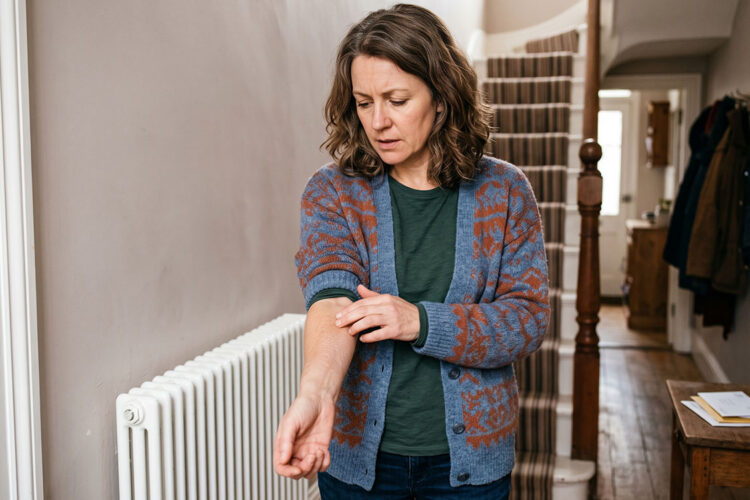
It happens almost overnight. The first cold snap arrives, the furnace kicks on, and within a few days your skin feels tight after every shower. Foundation clings to dry patches, your hands look older than they did in August, and the moisturizer that worked perfectly all summer suddenly seems to disappear the minute you put it on.
It’s not your imagination, and you haven’t done anything wrong. Indoor heating changes the air around you in a way your skin notices immediately. Once you understand what’s going on at the surface, the fixes make much more sense.
The Real Culprit: Heated Air Is Thirsty Air
Cold air can’t hold much water vapour. When your heating system pulls in that cold air and warms it, the amount of water in the air stays the same, but the air’s capacity to hold water rises sharply. The result is a big drop in relative humidity.
Here’s what that looks like in practice. Air at minus 10°C and 80 percent humidity outside can fall below 10 percent relative humidity once it’s warmed to a comfortable 21°C indoors. For comparison, many desert climates rarely drop that low. Forced air systems make it more noticeable because they keep that dry air moving across your skin all day and all night.
Why Dry Air Pulls Water Out of Your Skin
The outermost layer of your skin, the stratum corneum, works like a brick wall. The bricks are flattened skin cells filled with natural moisturizing factors, a mix of amino acids, salts, and other compounds that bind water. The mortar is a carefully arranged blend of lipids, mainly ceramides, cholesterol, and fatty acids, that slows water from escaping.
Water constantly moves from the deeper, wetter layers of your skin out toward the air. Dermatologists call this transepidermal water loss. When the surrounding air is humid, that loss is gentle. When the air is very dry, the difference in moisture between your skin and the room is much larger, and water leaves faster than your skin can replace it.
Research backs this up. Controlled studies have shown that even short exposure to a low humidity environment reduces the water content of the stratum corneum and makes skin rougher. A large review of the research on environmental humidity and temperature concluded that low humidity and cold temperatures weaken skin barrier function and make skin more reactive to irritants and more prone to flare ups of conditions like eczema.
The Habits That Make It Worse
Dry air is the starting point, but a few seasonal habits pile on top of it.
Longer, hotter showers are the biggest one. Hot water feels wonderful when it’s cold outside, but it dissolves the protective lipids between your skin cells faster than lukewarm water does. Harsh or fragranced cleansers strip those same lipids even further.
Moving back and forth between freezing wind outdoors and warm, dry air indoors also stresses the barrier. Wind speeds up water loss, and cold temperatures slow the enzymes your skin relies on to rebuild its lipid layer.
Age plays a role too. As we get older, skin produces fewer barrier lipids and less natural moisturizing factor, and it takes longer to recover after the barrier is disrupted. That’s why the heating season often hits skin harder in our 40s, 50s, and beyond than it did in our 20s.
What Actually Helps
Put some moisture back in the air. A humidifier in the bedroom is one of the most effective changes you can make, since you spend seven or eight hours there every night. The U.S. Environmental Protection Agency recommends keeping indoor humidity between 30 and 50 percent. An inexpensive hygrometer will tell you where you stand. In very cold climates, aim for the lower end of that range to avoid condensation on windows, and clean your humidifier regularly so it doesn’t grow mold or bacteria.
Rethink your shower. Keep showers and baths short, use warm rather than hot water, and choose a gentle, fragrance free cleanser. Pat your skin dry instead of rubbing it.
Moisturize within a few minutes of bathing. The American Academy of Dermatology recommends applying moisturizer while skin is still slightly damp, which helps trap water in the skin rather than letting it evaporate into the dry room.
Look for a moisturizer with the right mix of ingredients. Effective moisturizers generally combine three types of ingredients. Humectants such as glycerin and hyaluronic acid draw water into the outer layer of skin. Emollients such as shea butter and plant oils smooth and soften the rough spaces between skin cells. Occlusives such as silicones and petrolatum form a light seal that slows water loss. In winter, a cream usually outperforms a lightweight lotion because it contains more of these barrier supporting ingredients.
Go easy on exfoliation. Scrubs, strong acids, and retinoids can all be useful, but when your barrier is already under stress, they can tip skin into redness and flaking. If you use them, consider cutting back to a few nights a week during the coldest months and always follow with a moisturizer.
Protect your skin outdoors. Gloves, scarves, and a good lip balm reduce wind exposure. Winter sun reflecting off snow still causes UV damage, so daily sunscreen on the face remains a good habit year round.
Drink enough water, but don’t expect miracles. Research suggests that increasing water intake can modestly improve skin hydration, particularly in people who normally drink very little. It helps, but it won’t make up for very dry indoor air on its own.
Know when to get help. If your skin cracks, bleeds, itches intensely, or doesn’t improve after a few weeks of consistent care, talk to your doctor or a dermatologist. Persistent dryness can sometimes point to eczema, a thyroid issue, or a reaction to a medication.
The Bottom Line
Skin gets drier when the heating goes on because warmed winter air has very little moisture in it, and your skin loses water into that dry air faster than it can replace it. Hot showers, harsh cleansers, and wind make things worse. The fix is layered and simple: add humidity back into your home, protect the lipid barrier with gentler washing, and use a moisturizer rich in humectants, emollients, and occlusives, applied right after bathing. Small, consistent changes make a real difference, often within a week or two.
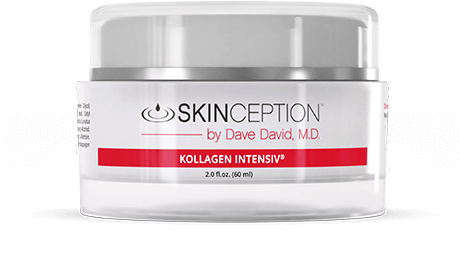
A Winter Ready Moisturizer: Kollagen Intensiv®
If your daytime and nighttime routine needs an upgrade for the heating season, Kollagen Intensiv® is worth a look. It’s a rich daily cream built around exactly the kind of ingredient mix that dry indoor air calls for. Plant derived glycerine and hyaluronic acid act as humectants, shea butter provides emollient softness, cyclopentasiloxane gives skin a plumper, smoother look, and oat kernel extract helps soothe and moisturize. Tocopherol, green tea leaf extract, and cucumber fruit extract add antioxidant support.
Kollagen Intensiv® also goes beyond basic hydration. Its key ingredient, the patented peptide Syn®-Coll, was shown in a clinical study to reduce the appearance of wrinkles by up to 354 percent and improve skin texture by up to 201 percent after 84 days. The formula also includes retinol, stabilized vitamin C, and additional peptides that support the skin’s natural collagen production. Simply apply it twice a day after cleansing in the morning and evening, so one jar covers both day and night care. Because it contains retinol, if your skin is especially dry or sensitive right now, you can start with once daily use and build up. Every order is backed by a 67 day money back guarantee.
References
- Engebretsen KA, Johansen JD, Kezic S, Linneberg A, Thyssen JP. The effect of environmental humidity and temperature on skin barrier function and dermatitis. Journal of the European Academy of Dermatology and Venereology. 2016;30(2):223-249.
- Egawa M, Oguri M, Kuwahara T, Takahashi M. Effect of exposure of human skin to a dry environment. Skin Research and Technology. 2002;8(4):212-218.
- Proksch E, Brandner JM, Jensen JM. The skin: an indispensable barrier. Experimental Dermatology. 2008;17(12):1063-1072.
- Rawlings AV, Harding CR. Moisturization and skin barrier function. Dermatologic Therapy. 2004;17(Suppl 1):43-48.
- Lodén M. Role of topical emollients and moisturizers in the treatment of dry skin barrier disorders. American Journal of Clinical Dermatology. 2003;4(11):771-788.
- Palma L, Marques LT, Bujan J, Rodrigues LM. Dietary water affects human skin hydration and biomechanics. Clinical, Cosmetic and Investigational Dermatology. 2015;8:413-421.
- American Academy of Dermatology. Dermatologists’ top tips for relieving dry skin. https://www.aad.org/public/everyday-care/skin-care-basics/dry/dermatologists-tips-relieve-dry-skin
- U.S. Environmental Protection Agency. A Brief Guide to Mold, Moisture, and Your Home. https://www.epa.gov/mold/brief-guide-mold-moisture-and-your-home
- Leading Edge Health. Kollagen Intensiv® product information. https://www.leadingedgehealth.com/products/kollagen-intensiv/