

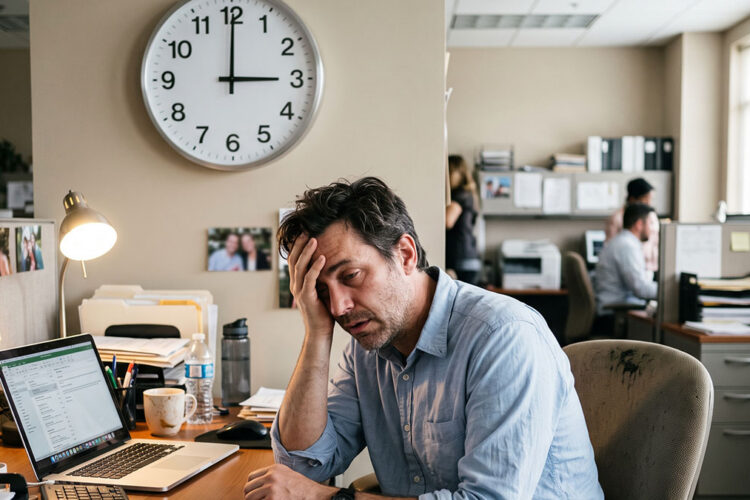
You started the day sharp. Emails got answered, decisions got made, and your to-do list shrank. Then, somewhere around mid-afternoon, it happened. The words on your screen start to blur, you read the same sentence three times, and a nap under your desk suddenly sounds like a brilliant idea.
This is the 3 p.m. wall, and almost everyone hits it. The good news is that it is not a character flaw or a sign that you are lazy. It is biology. Once you understand what is driving the slump, you can do something about it that works better than another cup of coffee.
Why Afternoon Focus Collapses
- Your body clock has a built-in dip
Most people assume the afternoon crash comes from lunch. Lunch plays a role, but it is not the whole story. Researchers who study circadian rhythms have found that alertness naturally dips in the early to mid-afternoon, and that this dip shows up even when people skip lunch entirely (Monk, 2005). Your internal clock produces two windows of stronger sleep pressure in a 24-hour day. The big one is overnight. The smaller one lands in the early afternoon. That is why cultures around the world built the siesta into the day.
- Big, carb-heavy lunches make it worse
While lunch does not cause the dip, what you eat can deepen it. Monk’s review notes that larger meals tend to amplify the post-lunch decline in performance. A heavy plate of pasta, a sandwich on white bread with chips, or a sugary drink can leave you feeling sluggish as your body works to process it. A lighter lunch built around protein, vegetables, and fiber tends to be easier on your afternoon energy.
- Mental fuel runs low after hours of focus
Sustained attention is work. After a morning of meetings, decisions, and screen time, your brain’s ability to stay locked on a single task wears down. Attention restoration theory, developed by environmental psychologist Stephen Kaplan, describes how directed attention becomes fatigued with use and needs a genuine break to recover (Kaplan, 1995). Pushing harder does not refill the tank. Stepping away does.
- You are probably a little dehydrated
It does not take much. In a study of young men, mild dehydration of roughly 1.5 percent of body water impaired working memory and increased feelings of fatigue and anxiety (Ganio et al., 2011). A companion study in women found that similar mild dehydration lowered mood, reduced concentration, and increased perceived task difficulty (Armstrong et al., 2012). If your water bottle has been sitting untouched since 10 a.m., that alone could be dragging you down.
- Your environment is working against you
Dim lighting, stale air, and hours of sitting all add up. Light is one of the strongest signals your brain uses to stay alert, and research shows that brighter light exposure during the day has a measurable alerting effect (Cajochen, 2007). An office with low light and closed blinds sends your brain the wrong message at exactly the wrong time.
What Actually Restores Afternoon Focus
Take a short nap, if you can
The nap does not need to be long. In fact, shorter is better. A study comparing nap lengths found that a 10-minute nap produced immediate improvements in alertness and cognitive performance that lasted for more than two hours, without the grogginess that can follow longer naps (Brooks and Lack, 2006). Another study found that naps supported certain types of memory better than caffeine did (Mednick et al., 2008). If you work from home or have a quiet space, set a timer for 10 to 20 minutes and close your eyes.
Use micro-breaks on purpose
When you cannot nap, brief breaks are the next best tool. Researchers at the University of Illinois found that people who took short, occasional breaks from a long task maintained their performance, while those who worked straight through saw it decline (Ariga and Lleras, 2011). A 2022 meta-analysis also found that micro-breaks of 10 minutes or less boosted feelings of vigor and reduced fatigue (Albulescu et al., 2022). Try stepping away from your screen for five minutes every hour, and make the break an actual break rather than a scroll through your phone.
Move your body
A walk is one of the simplest reset buttons available. Stanford researchers found that walking boosted creative thinking, both during the walk and shortly after (Oppezzo and Schwartz, 2014). A 10-minute loop around the block, a few flights of stairs, or even a stretch at your desk gets blood moving and signals your brain to wake up.
Get into the light
If possible, head outside for a few minutes of daylight. If not, open the blinds or work near a window. Brighter light helps counter the natural afternoon dip and supports alertness (Cajochen, 2007).
Drink water before you reach for coffee
Keep a water bottle within reach and aim to sip steadily through the day. Since even mild dehydration can blunt focus and mood, topping up is one of the easiest wins you can get.
Be smart about afternoon caffeine
Caffeine can help in the moment, but timing matters. A sleep study found that caffeine taken even six hours before bedtime reduced total sleep time by more than an hour (Drake et al., 2013). A 3 p.m. coffee can quietly sabotage your sleep, which makes the next day’s wall even harder. If you need a lift, try having it earlier, choosing a smaller serving, or switching to a non-caffeinated option.
Rethink your lunch
Build your midday meal around lean protein, vegetables, healthy fats, and slower-digesting carbohydrates. Keeping portions moderate can help soften the afternoon dip rather than deepen it.
Protect your nights
The afternoon slump hits harder when you are running on too little sleep. Consistent bedtimes, a cooler and darker bedroom, and less screen time before bed all help you start the next day with a fuller tank.
The Bottom Line
The 3 p.m. wall is a normal part of human biology, not a personal failing. You cannot erase your circadian rhythm, but you can work with it. A lighter lunch, steady hydration, short breaks, daylight, a quick walk, and smarter caffeine habits can turn a lost afternoon into a productive one. Small, consistent changes add up to a noticeably sharper day.
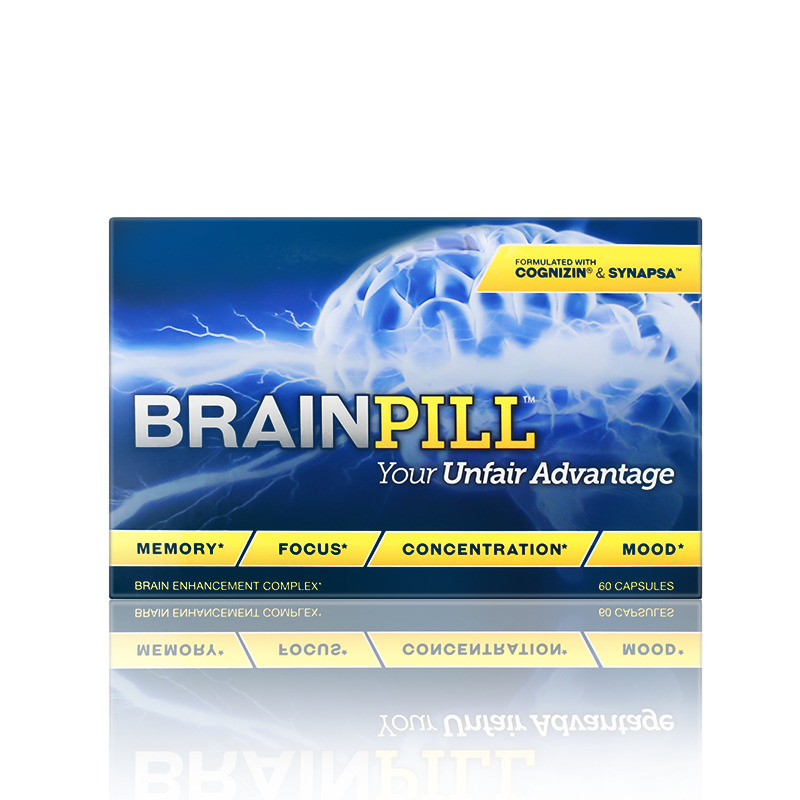
Support Your Focus with Brain Pill
For people whose work demands sharp thinking well past lunch, Brain Pill is designed to help. Formulated by Leading Edge Health, Brain Pill combines 13 nootropic ingredients chosen to support focus, mental energy, memory, and cognitive stamina throughout the day. Key ingredients include Cognizin Citicoline, Synapsa Bacopa Monnieri, Phosphatidylserine, L-Theanine, Tyrosine, Huperzine A, Ginkgo Biloba, DHA, and a blend of essential B vitamins that support healthy brain function.
Unlike energy drinks and coffee, Brain Pill contains no caffeine and no stimulants, so there are no jitters and no crash. It is built for steady, sustainable mental performance and works best when taken consistently for at least 30 days. Brain Pill is also backed by a 67-day money-back guarantee, so you can try it risk free.
These statements have not been evaluated by the Food and Drug Administration. This product is not intended to diagnose, treat, cure, or prevent any disease. Do not use if pregnant, planning to become pregnant, or breastfeeding. Consult your doctor before starting any supplement.
References
Albulescu, P., Macsinga, I., Rusu, A., Sulea, C., Bodnaru, A., and Tulbure, B. T. (2022). “Give me a break!” A systematic review and meta-analysis on the efficacy of micro-breaks for increasing well-being and performance. PLoS ONE, 17(8), e0272460.
Ariga, A., and Lleras, A. (2011). Brief and rare mental “breaks” keep you focused: Deactivation and reactivation of task goals preempt vigilance decrements. Cognition, 118(3), 439-443.
Armstrong, L. E., Ganio, M. S., Casa, D. J., et al. (2012). Mild dehydration affects mood in healthy young women. The Journal of Nutrition, 142(2), 382-388.
Brooks, A., and Lack, L. (2006). A brief afternoon nap following nocturnal sleep restriction: Which nap duration is most recuperative? Sleep, 29(6), 831-840.
Cajochen, C. (2007). Alerting effects of light. Sleep Medicine Reviews, 11(6), 453-464.
Drake, C., Roehrs, T., Shambroom, J., and Roth, T. (2013). Caffeine effects on sleep taken 0, 3, or 6 hours before going to bed. Journal of Clinical Sleep Medicine, 9(11), 1195-1200.
Ganio, M. S., Armstrong, L. E., Casa, D. J., et al. (2011). Mild dehydration impairs cognitive performance and mood of men. British Journal of Nutrition, 106(10), 1535-1543.
Kaplan, S. (1995). The restorative benefits of nature: Toward an integrative framework. Journal of Environmental Psychology, 15(3), 169-182.
Mednick, S. C., Cai, D. J., Kanady, J., and Drummond, S. P. A. (2008). Comparing the benefits of caffeine, naps and placebo on verbal, motor and perceptual memory. Behavioural Brain Research, 193(1), 79-86.
Monk, T. H. (2005). The post-lunch dip in performance. Clinics in Sports Medicine, 24(2), e15-e23.
Oppezzo, M., and Schwartz, D. L. (2014). Give your ideas some legs: The positive effect of walking on creative thinking. Journal of Experimental Psychology: Learning, Memory, and Cognition, 40(4), 1142-1152.