

Whether you’re a competitive athlete, dedicated gym-goer, or weekend warrior, the quest for natural performance enhancement is universal. Enter ashwagandha—an ancient Ayurvedic herb that’s gaining serious traction in sports nutrition circles. While this adaptogenic plant has been used for millennia to promote vitality and resilience, modern research is now validating what traditional practitioners have long known: ashwagandha can meaningfully enhance athletic performance, strength, endurance, and recovery.
What Makes Ashwagandha Valuable for Athletes?
Ashwagandha (Withania somnifera), also known as Indian ginseng, is classified as an adaptogen—a natural substance that helps the body adapt to physical and mental stress. For athletes, this stress-management property is particularly valuable because intense training essentially represents a controlled form of physiological stress. The body’s ability to adapt to and recover from this stress determines progress and performance gains.
The root of the ashwagandha plant contains bioactive compounds called withanolides, which research suggests influence multiple systems relevant to athletic performance, including hormonal balance, energy metabolism, muscle protein synthesis, and recovery processes.
The Science Behind Strength and Power Gains
Muscle Strength Improvements
One of the most compelling areas of research on ashwagandha involves its effects on muscle strength and mass. A landmark 2015 study published in the Journal of the International Society of Sports Nutrition examined 57 young men with limited resistance training experience who were randomized to receive either 300 mg of ashwagandha root extract twice daily or placebo while following an eight-week resistance training program.[^1]
The results were striking. Compared to the placebo group, participants taking ashwagandha experienced significantly greater increases in:
- Bench press strength: 46.0 kg increase versus 26.4 kg for placebo
- Leg extension strength: 14.5 kg increase versus 9.8 kg for placebo
- Arm muscle size: 8.6 cm² increase versus 5.3 cm² for placebo
- Chest muscle size: 3.3 cm increase versus 1.4 cm for placebo
Perhaps even more importantly, the ashwagandha group showed significantly greater increases in testosterone levels and greater reductions in body fat percentage, while also experiencing less exercise-induced muscle damage as measured by creatine kinase levels—a marker of muscle breakdown.
Meta-Analysis Confirms the Benefits
A comprehensive 2021 Bayesian meta-analysis published in Nutrients reviewed 12 studies and confirmed these findings.[^2] The researchers found that ashwagandha supplementation at doses between 120-1,250 mg per day significantly enhanced variables related to strength and power in both trained and untrained individuals. The analysis revealed a medium-sized pooled treatment effect, with higher doses appearing more beneficial for athletes and those undergoing intensive training.
The mechanisms behind these strength gains appear multifaceted. Research suggests ashwagandha works by increasing testosterone levels, which supports muscle growth, while simultaneously decreasing cortisol—a catabolic hormone that can promote muscle breakdown. This dual action creates a more anabolic (muscle-building) internal environment.
Enhancing Cardiorespiratory Endurance
VO2max Improvements
While strength gains are impressive, endurance athletes have equal reason to be interested in ashwagandha. VO2max—the maximum rate of oxygen consumption during exercise—represents one of the most reliable predictors of endurance performance. Multiple studies have demonstrated ashwagandha’s ability to enhance this critical metric.
A 2020 systematic review and meta-analysis published in Nutrients examined five randomized controlled trials involving 162 participants.[^3] The analysis found a statistically significant improvement in VO2max with ashwagandha supplementation compared to placebo. Interestingly, the effects appeared even more pronounced in athletes compared to sedentary healthy adults, suggesting ashwagandha may amplify training adaptations.
A more recent 2025 systematic review confirmed these findings, reporting that ashwagandha supplementation significantly increased VO2max in athletes by 4.09 ml/min/kg.[^4] For context, this represents a meaningful performance enhancement that could translate to improved race times and reduced fatigue during sustained efforts.
Real-World Athletic Performance
A 2021 double-blind, placebo-controlled trial published in the Journal of Ethnopharmacology specifically investigated cardiorespiratory endurance in 50 healthy athletic adults.[^5] Participants receiving 300 mg of ashwagandha root extract twice daily for eight weeks showed significant improvements in:
- Maximum oxygen consumption (VO2max)
- Total Quality Recovery scores
- Recovery-Stress Questionnaire metrics
- Daily Analysis of Life Demands for Athletes scores
Additionally, the ashwagandha group demonstrated improved antioxidant levels, suggesting the herb helps manage oxidative stress—a major factor in exercise-induced fatigue and recovery limitations.
Accelerating Recovery and Reducing Fatigue
For athletes, recovery is where adaptation happens. Training breaks the body down; recovery builds it back stronger. Ashwagandha appears to support multiple aspects of this crucial process.
Muscle Recovery
Studies have shown that ashwagandha supplementation helps reduce markers of muscle damage, with one trial demonstrating stabilized creatine kinase levels compared to placebo, indicating less muscle breakdown from training.[^1] Lower creatine kinase values suggest muscles are experiencing less damage or recovering more efficiently between sessions, allowing for more consistent training.
Fatigue Management and Quality of Life
Research indicates that consumption of 120-1,000 mg ashwagandha per day has been shown to reduce fatigue and optimize recovery in healthy individuals.[^2] Studies have documented improvements in:
- Overall quality of sleep
- Perceived recovery between training sessions
- Time to exhaustion during exercise
- Physical health components of quality-of-life assessments
- Stress levels through reduced cortisol
This comprehensive recovery support extends beyond just physical metrics. By helping regulate the body’s stress response system, ashwagandha creates conditions more conducive to adaptation and growth.
Hormonal and Body Composition Effects
Testosterone Support
Testosterone plays a crucial role in muscle development, strength, and recovery for both men and women (though at different levels). Multiple studies have found ashwagandha supplementation associated with increased testosterone levels. One study reported that ashwagandha intake was associated with nearly a 15% increase in testosterone in men.[^4]
Another trial found that KSM-66 ashwagandha supplementation resulted in a 15.3% increase in testosterone compared to just 2.7% in the placebo group.[^6] This natural testosterone support may partly explain the enhanced muscle gains and strength improvements observed in research.
Body Composition Changes
Beyond muscle gain, studies consistently show ashwagandha helps reduce body fat percentage. The 2015 strength study found significantly greater reductions in body fat in the ashwagandha group compared to placebo.[^1] This favorable shift in body composition—gaining muscle while losing fat—represents the holy grail of athletic physique development.
Optimal Dosing and Timing for Athletes
Based on the research literature, effective ashwagandha protocols for athletic performance typically involve:
- Dosage: 300-600 mg of standardized root extract (containing 2.5-5% withanolides) taken twice daily
- Total daily dose: 600-1,200 mg
- Duration: Minimum 8 weeks for optimal results, though benefits may continue with longer use
- Timing: Many studies used morning and evening dosing, though some athletes prefer post-workout timing to support recovery
- Bioavailability: Look for formulations that include black pepper extract (piperine) to enhance absorption
Research suggests higher doses may be more suitable for athletes and trained individuals undergoing strenuous resistance or endurance training, with some studies using up to 1,250 mg daily.[^2]
What Athletes Should Know
Individual Variation
While research shows consistent benefits across populations, individual responses can vary. Factors like training status, baseline fitness, stress levels, sleep quality, and nutrition all influence how effective ashwagandha supplementation may be for any particular athlete.
Synergy with Training
It’s crucial to understand that ashwagandha isn’t magic—it enhances training adaptations but doesn’t replace the fundamental requirements of progressive overload, adequate protein intake, sufficient calories, and quality sleep. Think of it as a performance optimizer that helps your body respond more effectively to the training stimulus you provide.
Safety and Considerations
Ashwagandha demonstrates an excellent safety profile in research, with minimal side effects reported. However, athletes should consider:
- Consulting with healthcare providers before starting supplementation, especially if taking medications
- Avoiding ashwagandha during pregnancy or while nursing
- Being cautious if you have autoimmune conditions (ashwagandha may stimulate immune function)
- Checking with sports governing bodies regarding supplement regulations, though ashwagandha is generally permitted
More Research Needed
While the existing evidence is compelling, researchers acknowledge limitations in current studies, including relatively small sample sizes, limited long-term data, and most studies being conducted on male participants. More research is needed to understand optimal protocols for female athletes, older athletes, and elite-level competitors.
The Bottom Line for Athletes
The scientific evidence supporting ashwagandha for athletic performance is both substantial and growing. Research consistently demonstrates that standardized ashwagandha root extract, when combined with appropriate training, can enhance:
- Upper and lower body strength
- Muscle mass and size
- Cardiorespiratory endurance (VO2max)
- Power output
- Recovery between training sessions
- Body composition (increased muscle, decreased fat)
- Testosterone levels
- Resistance to fatigue
What makes ashwagandha particularly attractive is its multi-faceted approach to performance enhancement. Rather than targeting a single system, it appears to optimize multiple physiological processes simultaneously—from hormonal balance to stress management to cellular energy production.
For athletes seeking natural, research-backed performance enhancement, ashwagandha represents a promising addition to a comprehensive training, nutrition, and recovery program. While it won’t turn recreational athletes into Olympians overnight, the evidence suggests it can meaningfully improve training adaptations and help athletes reach their performance potential.
Discover GenuinePurity® Ashwagandha for Athletic Performance
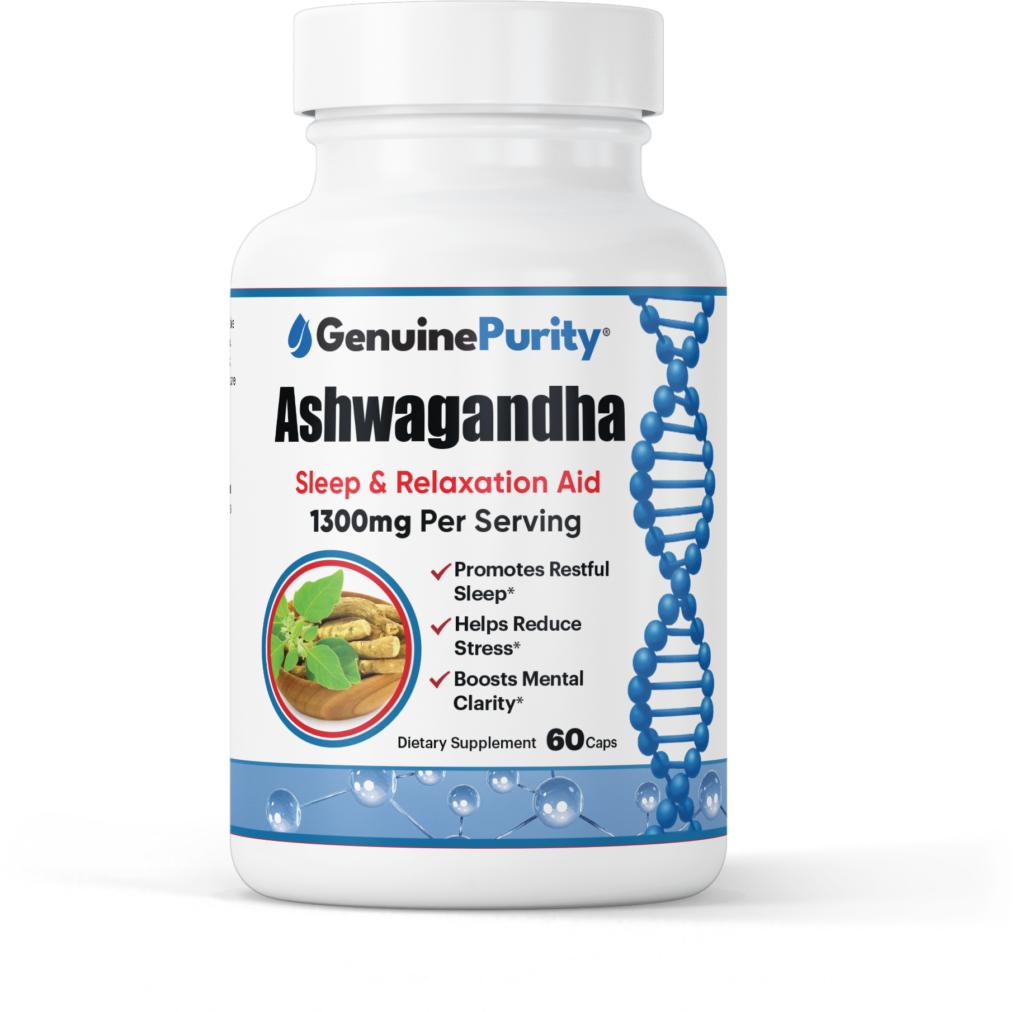
When selecting an ashwagandha supplement to support your training, quality and dosing matter tremendously. GenuinePurity® Ashwagandha delivers a clinically-studied 1,300 mg dose of organic ashwagandha root extract standardized to contain 5% withanolides—the bioactive compounds responsible for the performance-enhancing effects documented in research.
This potent formulation aligns with the dosages shown effective in athletic performance studies, providing the withanolide content necessary to support strength gains, endurance improvements, and enhanced recovery. GenuinePurity® goes further by including organic black pepper extract, which significantly enhances bioavailability by protecting withanolides during digestion and activating nutrient transporters. This means more of the beneficial compounds reach your bloodstream and remain active longer, maximizing the performance benefits of each dose.
For athletes and active individuals, GenuinePurity® Ashwagandha offers comprehensive support to help you train harder, recover faster, and perform better. Whether you’re looking to build strength, increase muscle mass, boost endurance, manage training stress, or accelerate recovery between sessions, this research-backed formulation provides the foundation for optimized athletic adaptation. The formula is made in the USA with pure, natural ingredients, undergoes rigorous third-party lab testing for quality and purity, and comes with a 97-day money-back guarantee.
Take your training to the next level with a supplement that’s backed by science and formulated for serious athletes who demand results.
References
[^1]: Wankhede, S., Langade, D., Joshi, K., Sinha, S. R., & Bhattacharyya, S. (2015). Examining the effect of Withania somnifera supplementation on muscle strength and recovery: a randomized controlled trial. Journal of the International Society of Sports Nutrition, 12, 43.
[^2]: Bonilla, D. A., Moreno, Y., Gho, C., Petro, J. L., Odriozola-Martínez, A., & Kreider, R. B. (2021). Effects of Ashwagandha (Withania somnifera) on physical performance: systematic review and Bayesian meta-analysis. Nutrients, 13(4), 1198.
[^3]: Pérez-Gómez, J., Villafaina, S., Adsuar, J. C., Merellano-Navarro, E., & Collado-Mateo, D. (2020). Effects of Ashwagandha (Withania somnifera) on VO2max: a systematic review and meta-analysis. Nutrients, 12(4), 1119.
[^4]: Jayawardena, R., Weerasinghe, K., & Sooriyaarachchi, P. (2025). The effect of Ashwagandha (Withania somnifera) on sports performance: a systematic review and meta-analysis. Turkish Journal of Sports Medicine, 60(2).
[^5]: Tiwari, S., Gupta, S. K., & Pathak, A. K. (2021). A double-blind, randomized, placebo-controlled trial on the effect of Ashwagandha (Withania somnifera dunal.) root extract in improving cardiorespiratory endurance and recovery in healthy athletic adults. Journal of Ethnopharmacology, 272, 113929.
[^6]: Nutraceuticals Business Review. (2023). The World’s Most Clinically Studied Ashwagandha for Promoting Muscle Strength and Testosterone Health. Retrieved from clinical research on KSM-66 ashwagandha supplementation.