


In our fast-paced modern world, anxiety has become an increasingly common challenge affecting millions of people. While conventional treatments exist, many individuals are turning to natural alternatives, with ashwagandha emerging as one of the most promising options. This ancient Ayurvedic herb has caught the attention of researchers worldwide, and the scientific evidence supporting its anxiolytic (anxiety-reducing) effects continues to grow.
What is Ashwagandha?
Ashwagandha (Withania somnifera), also known as Indian ginseng or winter cherry, is a small shrub native to India and Southeast Asia. For over 3,000 years, it has been a cornerstone of Ayurvedic medicine, traditionally used to promote vitality, reduce stress, and enhance overall well-being. The root of the plant contains bioactive compounds called withanolides, which are believed to be responsible for many of its therapeutic effects.
As an adaptogen, ashwagandha helps the body adapt to stress by modulating the hypothalamic-pituitary-adrenal (HPA) axis—the body’s central stress response system. This unique property makes it particularly valuable for managing anxiety and stress-related conditions.
The Science Behind Ashwagandha and Anxiety
Meta-Analyses Show Significant Benefits
Recent systematic reviews and meta-analyses provide compelling evidence for ashwagandha’s anxiety-reducing effects. A 2022 meta-analysis published in Phytotherapy Research examined 12 randomized controlled trials involving 1,002 participants and found that ashwagandha supplementation significantly reduced both anxiety and stress levels compared to placebo groups.1
The results were striking: participants taking ashwagandha experienced substantial reductions in anxiety scores on standardized assessment scales. The researchers noted that these benefits appeared across various dosages, though optimal effects were observed at doses between 300-600 mg per day.
A 2024 systematic review published in Explore analyzed nine randomized controlled trials with 558 patients and confirmed these findings.2 The study demonstrated significant improvements in Perceived Stress Scale (PSS) scores, Hamilton Anxiety Scale (HAS) scores, and—importantly—measurable reductions in serum cortisol levels, the primary stress hormone.
Clinical Trials Demonstrate Real-World Effectiveness
Beyond meta-analyses, numerous individual clinical trials have examined ashwagandha’s effects on anxiety with consistent positive results.
The KSM-66 Study (2012): One landmark study published in the Indian Journal of Psychological Medicine investigated a high-concentration full-spectrum ashwagandha root extract (KSM-66) in 64 adults with chronic stress.3 Over 60 days, participants taking 300 mg of ashwagandha extract twice daily showed remarkable improvements:
- Stress scores decreased significantly across all assessment scales
- Serum cortisol levels were substantially reduced
- No serious adverse events were reported
- Participants reported improved overall quality of life
The Shoden Study (2019): Another rigorous trial published in Medicine examined 60 stressed adults who received either 240 mg of ashwagandha extract (Shoden) or placebo daily for 60 days.4 Results showed statistically significant reductions in Hamilton Anxiety Rating Scale scores, along with decreased morning cortisol levels. The study also revealed improvements in testosterone and DHEA-S levels, suggesting broader hormonal benefits.
Dose-Response Research (2019): A study published in Cureus explored different dosage levels of ashwagandha root extract over eight weeks.5 Researchers found that both 250 mg/day and 600 mg/day doses produced significant reductions in stress and anxiety, with the higher dose showing more pronounced effects. Participants also reported improved sleep quality—an important finding since anxiety and sleep disturbances often go hand in hand.
How Ashwagandha Works to Reduce Anxiety
Research suggests ashwagandha reduces anxiety through multiple mechanisms:
- Cortisol Regulation: Studies consistently show that ashwagandha helps lower elevated cortisol levels, particularly morning cortisol, which is often elevated in people with chronic stress and anxiety.
- GABA Activity: Evidence indicates that ashwagandha may enhance the activity of gamma-aminobutyric acid (GABA), an inhibitory neurotransmitter that promotes relaxation and reduces neural excitability.
- Neurotransmitter Balance: Research suggests ashwagandha influences serotonin and dopamine levels, neurotransmitters critical for mood regulation.6
- Antioxidant Effects: The herb’s potent antioxidant properties may protect brain cells from oxidative stress, which has been linked to anxiety and other mood disorders.
- HPA Axis Modulation: By regulating the hypothalamic-pituitary-adrenal axis, ashwagandha helps restore balance to the body’s stress response system.
What the Evidence Shows: Key Findings
A 2014 systematic review in the Journal of Alternative and Complementary Medicine analyzed five human trials and found that all studies demonstrated greater improvements in anxiety and stress scores with ashwagandha compared to placebo.7 While the review noted that study methodologies varied and some exhibited potential bias, the consistency of positive findings across different research groups and populations is noteworthy.
Here’s what the cumulative evidence reveals:
- Anxiety reduction: Most studies report 30-50% reductions in anxiety scores compared to baseline
- Stress relief: Perceived stress scores typically decrease by 40-45% with ashwagandha supplementation
- Cortisol decrease: Reductions in cortisol levels range from 14-28% in various studies
- Safety profile: Ashwagandha demonstrates excellent tolerability with minimal side effects
- Onset of action: Benefits typically become noticeable within 2-4 weeks, with continued improvement over 8-12 weeks
Dosage and Standardization Matter
Not all ashwagandha supplements are created equal. Research suggests that effectiveness depends heavily on:
- Extract concentration: Studies typically use standardized extracts containing 2.5-5% withanolides
- Dosage: Effective doses generally range from 240-600 mg of extract daily
- Duration: Most studies show optimal results with 8-12 weeks of consistent use
- Extraction method: Root extracts appear more effective than leaf extracts
- Bioavailability enhancers: Some formulations include black pepper extract (piperine) to improve absorption
Important Considerations
While research on ashwagandha is promising, it’s important to maintain perspective:
- Not a cure-all: Ashwagandha should be viewed as one tool among many for managing anxiety
- Individual variation: Response to ashwagandha can vary between individuals
- Medical consultation: Those with anxiety disorders should consult healthcare providers before starting any supplement
- Medication interactions: Ashwagandha may interact with certain medications, including sedatives and thyroid medications
- Pregnancy and nursing: Ashwagandha is not recommended during pregnancy or breastfeeding
- Autoimmune conditions: People with autoimmune diseases should exercise caution
The Bottom Line
The research on ashwagandha for anxiety is remarkably consistent and compelling. Multiple randomized controlled trials, systematic reviews, and meta-analyses demonstrate that standardized ashwagandha extracts can significantly reduce anxiety symptoms and stress levels while improving overall well-being. The herb appears to work through multiple pathways, including cortisol regulation, neurotransmitter modulation, and HPA axis balancing.
What makes ashwagandha particularly attractive is its excellent safety profile and the fact that benefits extend beyond anxiety reduction to include improved sleep, enhanced cognitive function, and better stress resilience. While more research is always welcome, the existing body of evidence provides substantial support for ashwagandha as a valuable natural option for managing anxiety.
For those struggling with anxiety and looking for natural approaches, ashwagandha represents a scientifically-validated option backed by both ancient traditional use and modern clinical research.
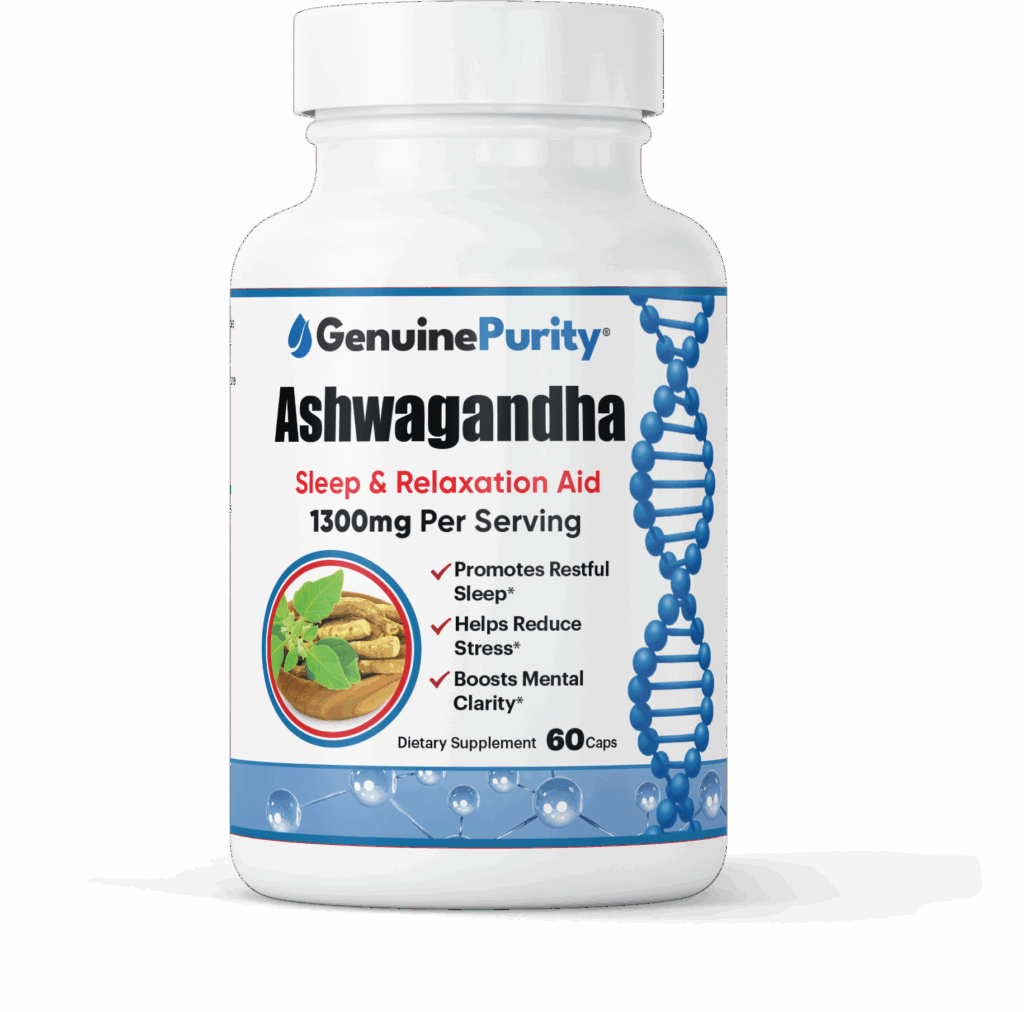
Discover GenuinePurity® Ashwagandha
When it comes to choosing an ashwagandha supplement, quality and potency matter. GenuinePurity® Ashwagandha delivers a clinically-studied 1,300 mg dose of organic ashwagandha root extract, standardized to contain 5% withanolides—the bioactive compounds responsible for the herb’s therapeutic effects. This ensures you receive highly potent support for cortisol reduction and stress management with every dose.
What sets GenuinePurity® apart is the inclusion of organic black pepper extract, which enhances bioavailability by protecting withanolides from digestive enzymes and activating nutrient transporters. This means more of the beneficial compounds reach your bloodstream and remain active longer, providing maximum benefit from each capsule.
GenuinePurity® Ashwagandha is formulated to help you fall asleep faster, stay asleep longer, wake up feeling refreshed, lift your mood, maintain emotional balance, boost all-day energy, and build long-term stress resilience. The formula is made in the USA with pure, authentic, natural ingredients, is third-party lab tested for quality and purity, and comes with a 97-day money-back guarantee—demonstrating the company’s confidence in their product’s effectiveness.
Whether you’re dealing with daily stress, occasional anxiety, restless nights, or simply seeking to enhance your overall well-being, GenuinePurity® Ashwagandha provides the clinically-backed support your body needs to thrive in today’s demanding world.
References
1: Akhgarjand, C., et al. (2022). Does Ashwagandha supplementation have a beneficial effect on the management of anxiety and stress? A systematic review and meta-analysis of randomized controlled trials. Phytotherapy Research, 36(11), 4115-4124.
2: Arumugam, V., et al. (2024). Effects of Ashwagandha (Withania Somnifera) on stress and anxiety: A systematic review and meta-analysis. Explore, 20(6), 103062.
3: Chandrasekhar, K., Kapoor, J., & Anishetty, S. (2012). A prospective, randomized double-blind, placebo-controlled study of safety and efficacy of a high-concentration full-spectrum extract of ashwagandha root in reducing stress and anxiety in adults. Indian Journal of Psychological Medicine, 34(3), 255-262.
4: Lopresti, A. L., Smith, S. J., Malvi, H., & Kodgule, R. (2019). An investigation into the stress-relieving and pharmacological actions of an ashwagandha (Withania somnifera) extract: A randomized, double-blind, placebo-controlled study. Medicine, 98(37), e17186.
5: Salve, J., Pate, S., Debnath, K., & Langade, D. (2019). Adaptogenic and anxiolytic effects of ashwagandha root extract in healthy adults: A double-blind, randomized, placebo-controlled clinical study. Cureus, 11(12), e6466.
6: Majeed, M., Nagabhushanam, K., & Mundkur, L. (2023). A standardized Ashwagandha root extract alleviates stress, anxiety, and improves quality of life in healthy adults by modulating stress hormones: Results from a randomized, double-blind, placebo-controlled study. Medicine, 102(41), e35521.
7: Pratte, M. A., Nanavati, K. B., Young, V., & Morley, C. P. (2014). An alternative treatment for anxiety: a systematic review of human trial results reported for the Ayurvedic herb ashwagandha (Withania somnifera). Journal of Alternative and Complementary Medicine, 20(12), 901-908.