

Why Vitamin C Is One of the Most Underestimated Nutrients
Ask someone what Vitamin C does and they will almost certainly say: “It helps with colds.” They are not wrong — but they are barely scratching the surface. Ascorbic acid is one of the most structurally versatile and physiologically essential molecules in the human body. It is a master antioxidant, an enzyme co-factor critical to collagen synthesis, a key player in neurotransmitter production, a modulator of immune function, and an enhancer of iron absorption. Scurvy — the devastating disease caused by Vitamin C deficiency — was once the leading cause of death among sailors not because it weakened their immune systems, but because without ascorbic acid, their bodies could not hold themselves together at a structural level [1].
Yet despite its vital importance, Vitamin C remains chronically underappreciated in modern supplementation. Many people assume that a daily multivitamin or a glass of orange juice covers their needs. The evidence suggests otherwise — both in terms of how much we actually need and how effectively standard supplements deliver it. This article examines what Vitamin C really does, why most people are getting less than they think, and what the science says about optimising your intake for genuine, measurable benefit.
What Vitamin C Actually Does in Your Body
1. Collagen Synthesis — The Structural Foundation
Vitamin C is an essential co-factor for prolyl hydroxylase and lysyl hydroxylase, the enzymes responsible for stabilising the triple-helix structure of collagen [2]. Collagen is the most abundant protein in the human body, forming the scaffolding of skin, tendons, ligaments, blood vessel walls, bone matrix, and cartilage. Without adequate Vitamin C, collagen is produced in a structurally defective form that cannot maintain tissue integrity — hence the bleeding gums, fragile skin, and wound healing failure that characterise scurvy [1].
This collagen connection has important implications beyond deficiency. Adequate — and potentially optimal — Vitamin C intake supports wound repair, skin elasticity, joint health, and vascular integrity. As we age and collagen turnover accelerates, ensuring sufficient ascorbate status may have real consequences for how our tissues age.
2. Antioxidant Defence — First Responder and Electron Donor
Ascorbic acid is one of the most powerful water-soluble antioxidants in human physiology. It donates electrons to neutralise reactive oxygen species (ROS) — the unstable free radicals generated by normal metabolism, UV radiation, pollution, and inflammation. Critically, Vitamin C also regenerates other antioxidants: it reduces oxidised Vitamin E (tocopherol) back to its active form, effectively amplifying the antioxidant network [3].
Vitamin C is particularly concentrated in tissues under high oxidative stress, including the brain, adrenal glands, and lens of the eye. The adrenal glands, which orchestrate the stress response, contain among the highest concentrations of ascorbate of any tissue in the body — and deplete that reservoir rapidly during acute stress [4]. Chronic stress, illness, or intense physical exertion can therefore significantly accelerate Vitamin C depletion.
KEY FACT: STRESS & VITAMIN C DEPLETION
During acute illness or psychological stress, urinary Vitamin C excretion rises sharply and plasma levels can fall by 30–50% within hours. This is one reason why requirements during illness are thought to be substantially higher than routine recommendations [4].
3. Immune System Modulation
Vitamin C’s immune role is far more sophisticated than “fighting colds.” Ascorbate accumulates in neutrophils, lymphocytes, and natural killer cells at concentrations up to 80 times higher than in plasma [5]. Within immune cells it serves multiple functions: it enhances chemotaxis (the migration of immune cells to infection sites), stimulates the production and activity of phagocytes, supports the oxidative burst used to destroy pathogens, and protects immune cells from self-generated oxidative damage during this process.
Meta-analyses of clinical trials suggest that while regular Vitamin C supplementation does not prevent colds in the general population, it does reduce the duration and severity of upper respiratory infections — and in people under high physical stress (marathon runners, soldiers in subarctic conditions), it significantly reduces cold incidence [6]. Emerging research is also exploring Vitamin C’s role in supporting immune resolution, helping to moderate excessive inflammatory responses.
4. Neurotransmitter Synthesis
Vitamin C is required for the enzymatic conversion of dopamine to norepinephrine via dopamine beta-hydroxylase — an ascorbate-dependent enzyme [7]. It is also involved in the biosynthesis of carnitine, which is essential for mitochondrial fatty acid oxidation and energy production. The brain maintains particularly high ascorbate concentrations and actively imports it against a concentration gradient, underscoring its neurological importance. Suboptimal Vitamin C status has been associated with fatigue, cognitive fog, and low mood — symptoms that are sometimes dismissed without consideration of nutritional status.
5. Iron Absorption Enhancement
Non-haem iron (the form found in plant foods) is absorbed far less efficiently than haem iron from animal sources. Vitamin C dramatically enhances non-haem iron absorption by reducing ferric iron (Fe³⁺) to the more absorbable ferrous form (Fe²⁺) and by chelating iron in a soluble complex that resists the inhibitory effects of phytates and polyphenols in plant foods [8]. Consuming Vitamin C-rich foods alongside plant-based iron sources can increase iron absorption by two- to six-fold — a clinically significant effect for vegetarians, vegans, and anyone with iron-deficiency tendencies.
6. Cardiovascular Health
Epidemiological studies have consistently associated higher Vitamin C intake and status with lower rates of cardiovascular disease [9]. Several mechanisms may underlie this association. Ascorbate protects low-density lipoprotein (LDL) particles from oxidation — a key early step in atherosclerotic plaque formation. It supports endothelial function by promoting nitric oxide bioavailability, which regulates vascular tone. And its role in collagen synthesis directly supports the structural integrity of arterial walls. Interventional trials have shown that supplementation can improve endothelial function in patients with coronary artery disease [10].
The Uncomfortable Truth About Intake and Absorption
Are We Getting Enough?
Official recommended daily allowances (RDAs) for Vitamin C range from 75 mg/day for women to 90 mg/day for men in most Western countries, with an additional 35 mg recommended for smokers [11]. These figures are set to prevent deficiency, not to optimise the biological functions described above. A growing body of research suggests that the amounts required to saturate immune cells, maintain peak antioxidant capacity, and support collagen synthesis under physiological stress are substantially higher — in the range of 200–500 mg per day from food and supplements combined [12].
Meanwhile, population surveys consistently find that significant minorities — in some countries, the majority — fall short even of the modest RDA. Dietary factors (low fruit and vegetable intake), lifestyle factors (smoking, alcohol consumption, chronic stress, intense exercise), and health conditions (infection, inflammation, diabetes) all accelerate Vitamin C utilisation and increase requirements. The result is that many people are operating with a functional Vitamin C shortfall without meeting the clinical threshold for deficiency [13].
~31%
of U.S. adults are estimated to have inadequate Vitamin C intake
Source: NHANES 2003–2006 dietary intake data [13]
The Absorption Ceiling Problem
This is where supplementation becomes complicated. Vitamin C is absorbed in the small intestine via two sodium-dependent transporters: SVCT1 and SVCT2. These transporters are saturable — meaning they can only process a finite amount of ascorbate at one time. At doses of 200 mg or below, absorption efficiency is high (approximately 70–90%). As doses increase above 200–500 mg, fractional absorption drops sharply. At 1,000 mg per dose, only around 50% may be absorbed. At very high doses, a significant proportion passes unabsorbed into the colon, where it draws water osmotically — causing the diarrhoea and bloating well known to anyone who has taken high-dose Vitamin C [12].
This saturation creates a frustrating catch-22: the doses needed to achieve high plasma and tissue concentrations cannot be reached efficiently via standard oral supplementation without gastrointestinal consequences. The only route that historically bypassed this limitation was intravenous (IV) administration — impractical for everyday supplementation.
Standard Oral Vitamin C
- Absorption drops sharply above 200 mg
- High doses cause GI discomfort
- Plasma levels plateau even with gram-level doses
- Inexpensive but limited ceiling on tissue saturation
Liposomal Vitamin C
- Bypasses intestinal transporter saturation
- Absorbed via endocytosis — a separate pathway
- Achieves higher plasma levels at equivalent doses
- Well-tolerated even at higher doses
The Liposomal Advantage
A Different Route to the Bloodstream
Liposomal drug delivery was developed in pharmaceutical research as a way to improve the bioavailability of compounds that are poorly absorbed, unstable, or that cause adverse effects at the doses needed for efficacy. The technology has since been adapted for nutritional supplementation, and Vitamin C is among the applications with the strongest evidence base.
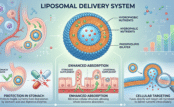
In liposomal Vitamin C, ascorbate molecules are encapsulated within microscopic phospholipid bilayer vesicles — liposomes — that structurally mimic the cell membranes found throughout the body. Because these particles are recognised by intestinal cells as membrane-like structures, they are internalised via endocytosis rather than via the saturable SVCT transporters. This entirely different absorption pathway is not subject to the same capacity ceiling as transporter-mediated absorption, meaning that more ascorbate reaches systemic circulation even at higher doses [14].
What the Research Shows
A landmark pharmacokinetic study by Davis et al. compared plasma Vitamin C concentrations following liposomal supplementation, standard oral supplementation, and IV administration. Liposomal Vitamin C produced significantly higher area-under-the-curve plasma concentrations than standard oral supplementation at equivalent doses, and achieved levels approaching those seen with IV delivery at a fraction of the cost and inconvenience [15].
A subsequent study by Garg et al. (2021) further confirmed that liposomal encapsulation increases Vitamin C bioavailability versus unencapsulated oral forms, and noted that the gastrointestinal tolerability of the liposomal form was markedly better — consistent with the reduced exposure of the intestinal lumen to unabsorbed ascorbate [16].
BIOAVAILABILITY IN CONTEXT
Liposomal Vitamin C has been described in the research literature as producing “pharmacological-level” plasma concentrations via an oral route — something previously thought achievable only through intravenous administration [15]. This makes it particularly valuable for those seeking the benefits associated with higher ascorbate status without IV access or standard oral GI side effects.
Who May Benefit Most from Optimising Vitamin C
While adequate Vitamin C is important for everyone, certain groups may have especially elevated requirements or face greater barriers to achieving optimal status through diet alone:
Smokers and those regularly exposed to secondhand smoke: Cigarette smoke generates substantial oxidative stress and depletes ascorbate directly. Smokers’ Vitamin C requirements are estimated to be 35+ mg/day higher than non-smokers, though many researchers consider this a conservative figure [11].
People under chronic stress: As noted, the adrenal glands are among the largest consumers of Vitamin C in the body. Chronic psychological or physiological stress rapidly depletes circulating ascorbate, increasing requirements significantly [4].
Older adults: Ageing is associated with reduced dietary intake, altered absorption, and increased systemic inflammation — all of which compromise Vitamin C status. Age-related conditions including cataracts, cardiovascular disease, and cognitive decline have been associated with lower ascorbate levels [17].
Athletes and those engaged in intense exercise: High-intensity exercise generates oxidative stress and increases metabolic demand for antioxidants. While some oxidative stress is necessary for adaptation, ensuring adequate ascorbate may reduce excessive oxidative damage and support recovery [3].
Individuals with iron-deficiency anaemia: Given Vitamin C’s powerful enhancement of non-haem iron absorption, those with low iron status — particularly vegetarians and vegans — may benefit significantly from concurrent supplementation [8].
People with diets low in fresh fruits and vegetables: The single most important determinant of Vitamin C status is dietary intake of plant foods. Those who struggle to meet the recommended 5+ servings of fruits and vegetables daily are at the greatest risk of suboptimal status [13].
Practical Guidance on Optimising Your Vitamin C
Food First
Whole food sources of Vitamin C provide ascorbate alongside bioflavonoids, polyphenols, and other phytonutrients that may act synergistically to enhance its effects. The richest sources include:
- Bell peppers (red peppers contain almost three times as much Vitamin C as oranges by weight)
- Kiwi fruit (one medium kiwi provides approximately 70 mg — close to the full RDA)
- Broccoli, Brussels sprouts, and other cruciferous vegetables
- Strawberries, blackcurrants, and citrus fruits
- Guava — one of the single richest food sources, with over 200 mg per 100 g
- Fresh herbs: parsley, thyme, and chives are surprisingly concentrated sources
IMPORTANT: Heat and storage degrade Vitamin C significantly.
Raw or lightly steamed vegetables retain substantially more ascorbate than boiled. Fresh fruit consumed promptly after purchase has higher Vitamin C content than produce stored for several days at room temperature.
When to Supplement — and How
For individuals whose dietary intake is consistently below optimal, or whose requirements are elevated by stress, illness, age, or lifestyle, supplementation is a practical and well-tolerated strategy. Key considerations:
Spread doses through the day: Because of transporter saturation, a single large daily dose is less effective than two or three smaller doses spread across the day. This applies to standard oral forms; liposomal formulations are less constrained by this limitation.
Pair with meals: Vitamin C taken with iron-containing foods enhances absorption of plant-based iron. It also benefits from the broader food matrix and is generally better tolerated with food.
Consider the form: For those seeking higher plasma concentrations — whether to support immune function during illness, promote collagen synthesis, or achieve the antioxidant levels associated with reduced cardiovascular risk — standard oral ascorbic acid has a meaningful ceiling. Liposomal Vitamin C offers a practical alternative that achieves higher bioavailability without IV access.
Monitor tolerance: High doses of standard oral Vitamin C commonly cause GI symptoms. If this occurs, reduce the dose or switch to a buffered form (sodium or calcium ascorbate) or a liposomal preparation.
A Note on Upper Limits
The tolerable upper intake level (UL) for Vitamin C in adults is set at 2,000 mg/day by most health authorities [11]. This limit is based primarily on the risk of gastrointestinal side effects (osmotic diarrhoea) and, at very high doses, concerns about oxalate formation and kidney stone risk in susceptible individuals. For the vast majority of healthy adults, doses well below this threshold — in the range of 500–1,000 mg/day — are both safe and sufficient to achieve meaningful benefits beyond the RDA.
GenuinePurity® Liposomal C: Putting the Science to Work
Understanding the bioavailability gap between standard oral Vitamin C and what your body actually needs is one thing — closing that gap is another. GenuinePurity® Liposomal C by Leading Edge Health was developed precisely to bridge that divide. Using genuine phosphatidylcholine liposomal encapsulation — not simply “lipid-coated” ascorbic acid — each capsule delivers ascorbate wrapped in microscopic phospholipid bilayer vesicles that mirror the structure of your own cell membranes. This allows the formula to bypass the intestinal SVCT transporter bottleneck entirely, entering circulation via endocytosis and achieving plasma concentrations that standard oral supplementation cannot match at equivalent doses. The result is a form of Vitamin C that works with your body’s absorption biology rather than running up against its ceiling — and does so without the gastrointestinal discomfort that so often accompanies high-dose ascorbic acid in conventional capsule or powder form.
What sets GenuinePurity® Liposomal C apart goes beyond the delivery technology. Every batch is manufactured in a cGMP-certified facility and independently third-party tested for ascorbate concentration, liposome integrity, and freedom from contaminants — so the dose on the label is the dose in the capsule, every time. The formula is free from artificial colors, flavors, and unnecessary excipients, and is suitable for discerning supplement users who apply the same scrutiny to their supplements as they do to their food. For anyone serious about leveraging Vitamin C’s full spectrum of benefits — from immune resilience and collagen support to antioxidant defence and cardiovascular health — GenuinePurity® Liposomal C represents the most scientifically coherent way to do it. As with all supplements, consult your healthcare provider before beginning use.
Rethinking an Old Friend
Vitamin C is not glamorous. It does not have the mystique of newly discovered longevity molecules or the novelty of cutting-edge peptides. But it is quietly essential to nearly every system in the body — from the structural scaffolding of your tissues to the biochemistry of your brain, immune cells, and cardiovascular system.
The case for paying closer attention to Vitamin C status is compelling precisely because it is so easy to overlook. We assume it is covered. We trust that our diet provides what we need. But the science consistently shows that large proportions of the population are operating below optimal levels, and that the ceiling imposed by standard oral supplementation limits what can realistically be achieved without rethinking delivery.
Whether through a richer dietary strategy — more bell peppers, fewer boiled vegetables — or through a well-formulated liposomal supplement that actually gets ascorbate into circulation in meaningful amounts, getting serious about Vitamin C is one of the simplest, most evidence-grounded investments you can make in your long-term health. Orange juice is a perfectly fine start. But it is only the beginning.
References
- Carpenter KJ. (2012). The discovery of vitamin C. Ann Nutr Metab, 61(3), 259–264.
- Peterkofsky B. (1991). Ascorbate requirement for hydroxylation and secretion of procollagen: relationship to inhibition of collagen synthesis in scurvy. Am J Clin Nutr, 54(6 Suppl), 1135S–1140S.
- Carr AC & Frei B. (1999). Toward a new recommended dietary allowance for vitamin C based on antioxidant and health effects in humans. Am J Clin Nutr, 69(6), 1086–1107.
- Padayatty SJ et al. (2003). Vitamin C as an antioxidant: evaluation of its role in disease prevention. J Am Coll Nutr, 22(1), 18–35.
- Carr AC & Maggini S. (2017). Vitamin C and immune function. Nutrients, 9(11), 1211.
- Hemilä H & Chalker E. (2013). Vitamin C for preventing and treating the common cold. Cochrane Database Syst Rev, 2013(1), CD000980.
- Levine M et al. (1999). Criteria and recommendations for vitamin C intake. JAMA, 281(15), 1415–1423.
- Lynch SR & Cook JD. (1980). Interaction of vitamin C and iron. Ann N Y Acad Sci, 355, 32–44.
- Myint PK et al. (2011). Plasma vitamin C concentrations predict risk of incident stroke over 10 y in 20,649 participants of the European Prospective Investigation into Cancer Norfolk prospective population study. Am J Clin Nutr, 93(3), 519–525.
- Heitzer T et al. (1996). Beneficial effects of alpha-tocopherol and ascorbic acid on endothelial dysfunction in type 2 diabetes. J Am Coll Cardiol, 29(3), 392–398.
- Institute of Medicine. (2000). Dietary Reference Intakes for Vitamin C, Vitamin E, Selenium, and Carotenoids. National Academies Press.
- Padayatty SJ & Levine M. (2016). Vitamin C: the known and the unknown and Goldilocks. Oral Dis, 22(6), 463–493.
- Schleicher RL et al. (2009). Serum vitamin C and the prevalence of vitamin C deficiency in the United States: 2003–2004 National Health and Nutrition Examination Survey (NHANES). Am J Clin Nutr, 90(5), 1252–1263.
- Bhagavan HN & Chopra RK. (2006). Plasma coenzyme Q10 response to oral ingestion of coenzyme Q10 formulations. Mitochondrion, 7(Suppl), S78–S88. [Liposomal delivery mechanism analogue.]
- Davis JL et al. (2016). Liposomal-encapsulated ascorbic acid: influence on vitamin C bioavailability and capacity to protect against ischemia–reperfusion injury. Nutr Metab Insights, 9, 25–30.
- Garg M et al. (2021). Vitamin C: the missing link in the management of COVID-19 and other viral infections. Front Nutr, 8, 679047. [Liposomal bioavailability data cited therein.]
- Fletcher AE et al. (2008). Sunlight exposure, antioxidants, and age-related macular degeneration. Arch Ophthalmol, 126(10), 1396–1403.